1. KEEP THE BRAIN ACTIVE WITH MENTAL EXERCISES
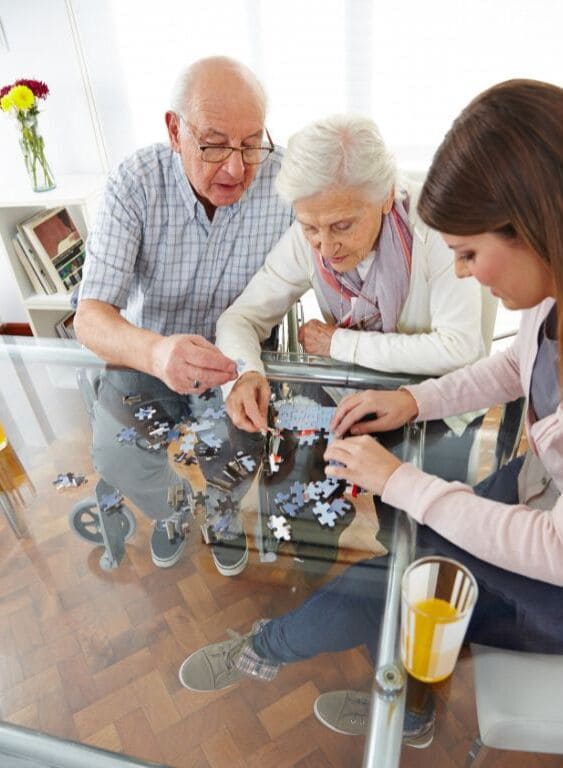
According to research, regular mental exercises (such as puzzles, sudoku, word games, etc.) help maintain mental functions. In fact, these games even possess a restorative power for the mind. Additionally, they enhance attention span. For this reason, caregivers can encourage the person under their care to solve puzzles for 30 minutes every day.
Furthermore, memory cards and matching games also help keep memory active. In particular, reviewing photographs from the past and recalling memories strengthens memory. Reminiscing about the past can sometimes cause sadness. However, at the very least, you can encourage the person in your care to focus on pleasant memories. You can accompany them with a smile as they recount their experiences.
Another activity we recommend for preserving the mental health of the elderly is reading books and engaging in conversations about them. These activities help keep thinking processes active.
2. REGULAR PHYSICAL ACTIVITY IS VERY IMPORTANT
We know that exercise has positive effects on our brain. Therefore, moving the body regularly is necessary to preserve the mental health of the elderly. According to a study published in the journal “Neurology,” elderly people who walk regularly are able to maintain their brain volume and slow cognitive decline. If the individual’s health condition permits, the elderly caregiver should encourage daily walks together. A half-hour walk is very beneficial for both the body and the mind. Moreover, if the person is interested, exercises like yoga and tai chi also increase concentration. In addition, they reduce stress levels and promote mental relaxation.
Finally, let’s talk about the power of music. Listening to music or playing a musical instrument improves mood and keeps the mind active. You can especially listen together to the music that the elderly individual loves.
3. ENCOURAGE SOCIALIZATION
We are beings who need social interaction. Social isolation—i.e., not meeting anyone—not only fosters a sense of loneliness but also increases the risk of cognitive decline. Scientific research has shown that elderly people with strong social bonds tend to have better mental functioning.
In fact, as people age, they require even more socialization. Have you ever heard that some elderly people go to the hospital merely to have someone to talk to? Or that some arrive well before their appointments and start conversing with whoever is nearby?
Attending a hobby course enables people to meet others and socialize. There are courses offered by public institutions that cater to the interests of the elderly. If their health permits, individuals can continue with one of these courses. This way, they not only socialize but also learn new things.
In addition, it is very important for the elderly to meet regularly with people they care about. For example, a weekly family gathering or meeting with friends increases the social interactions of our elderly and also boosts their morale.